Description
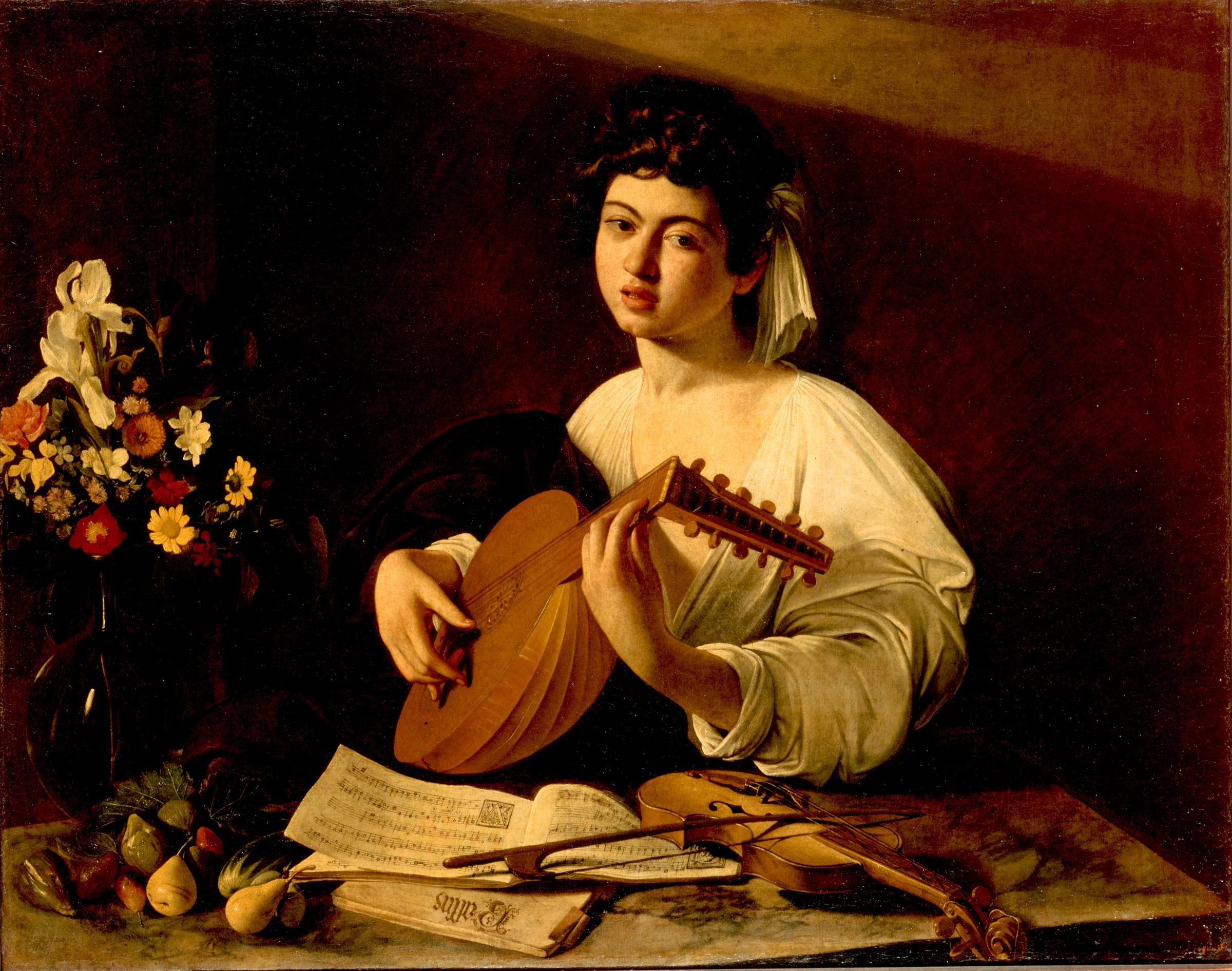
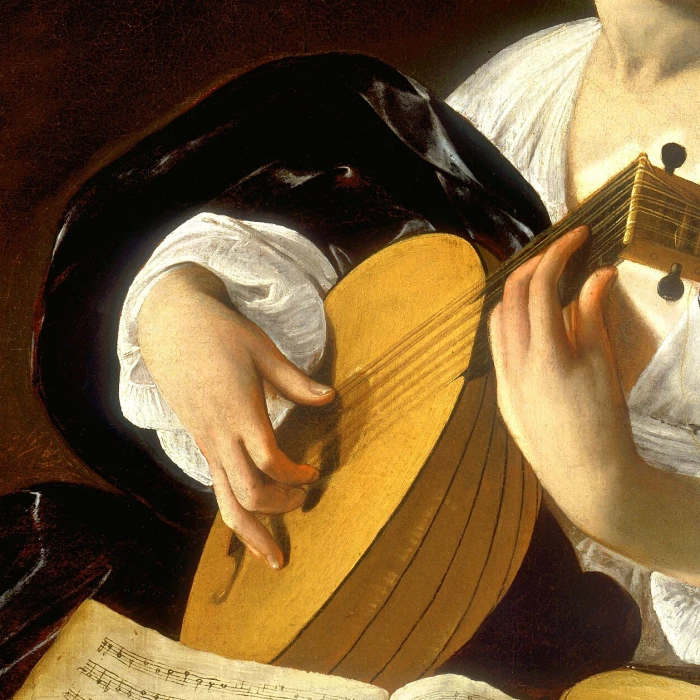
The Lute Player, probably painted around 1595–1596, belongs to the group of works in which Caravaggio developed a sophisticated combination of the human figure, music and still life during his early Roman years. A young musician holds a lute and appears to sing while looking towards the viewer.
Across the table Caravaggio carefully arranges musical scores, instruments, flowers and fruit. These objects demonstrate his remarkable ability to reproduce different materials, from the polished wood of the instrument and the transparency of glass to the delicate surfaces of flowers and fruit.
The existence of other versions of The Lute Player has generated considerable debate about their chronology. The painting also invites us to imagine a song that cannot actually be heard. Its subtle balance of stillness and musical action gives the young performer an unusually vivid presence.