Description
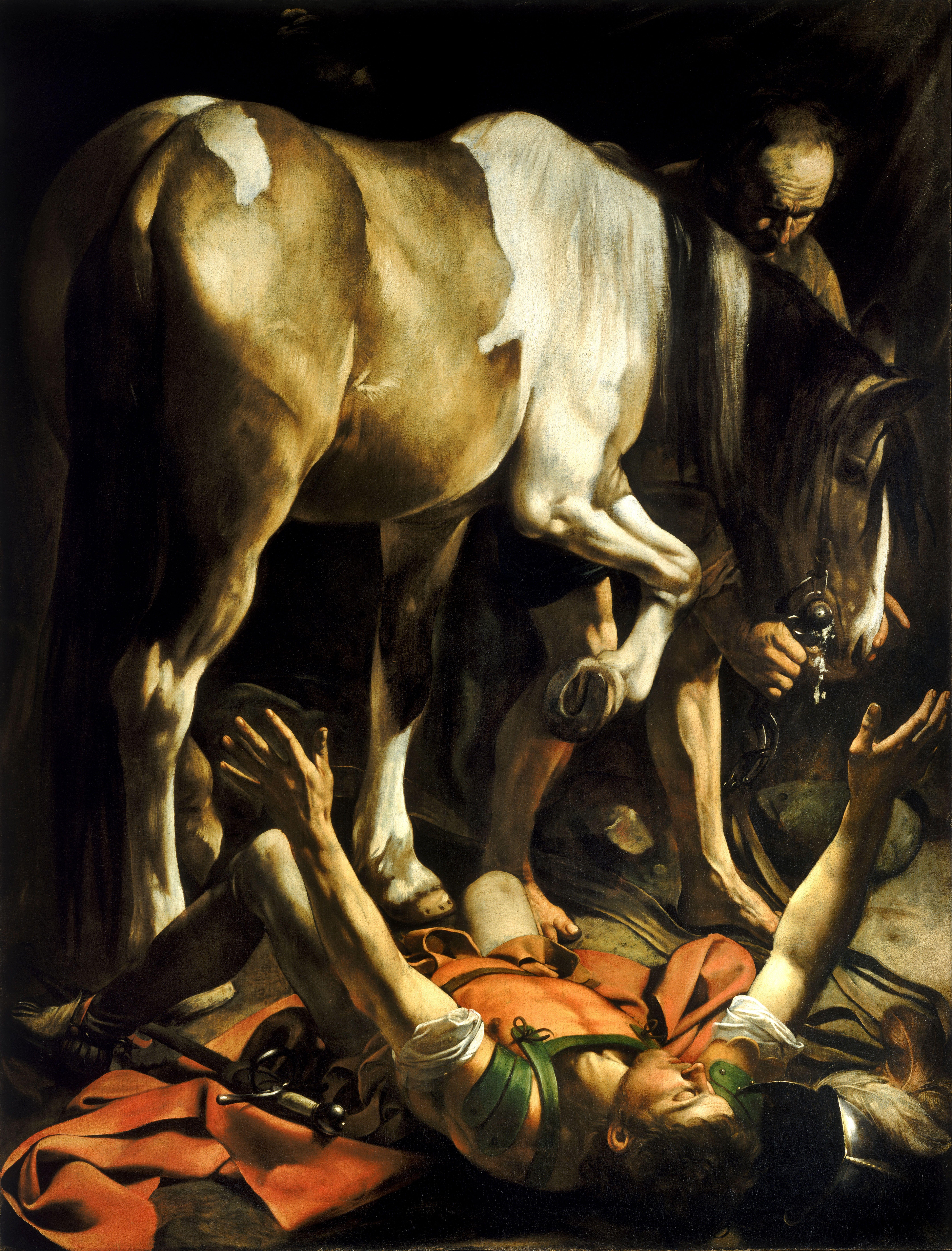
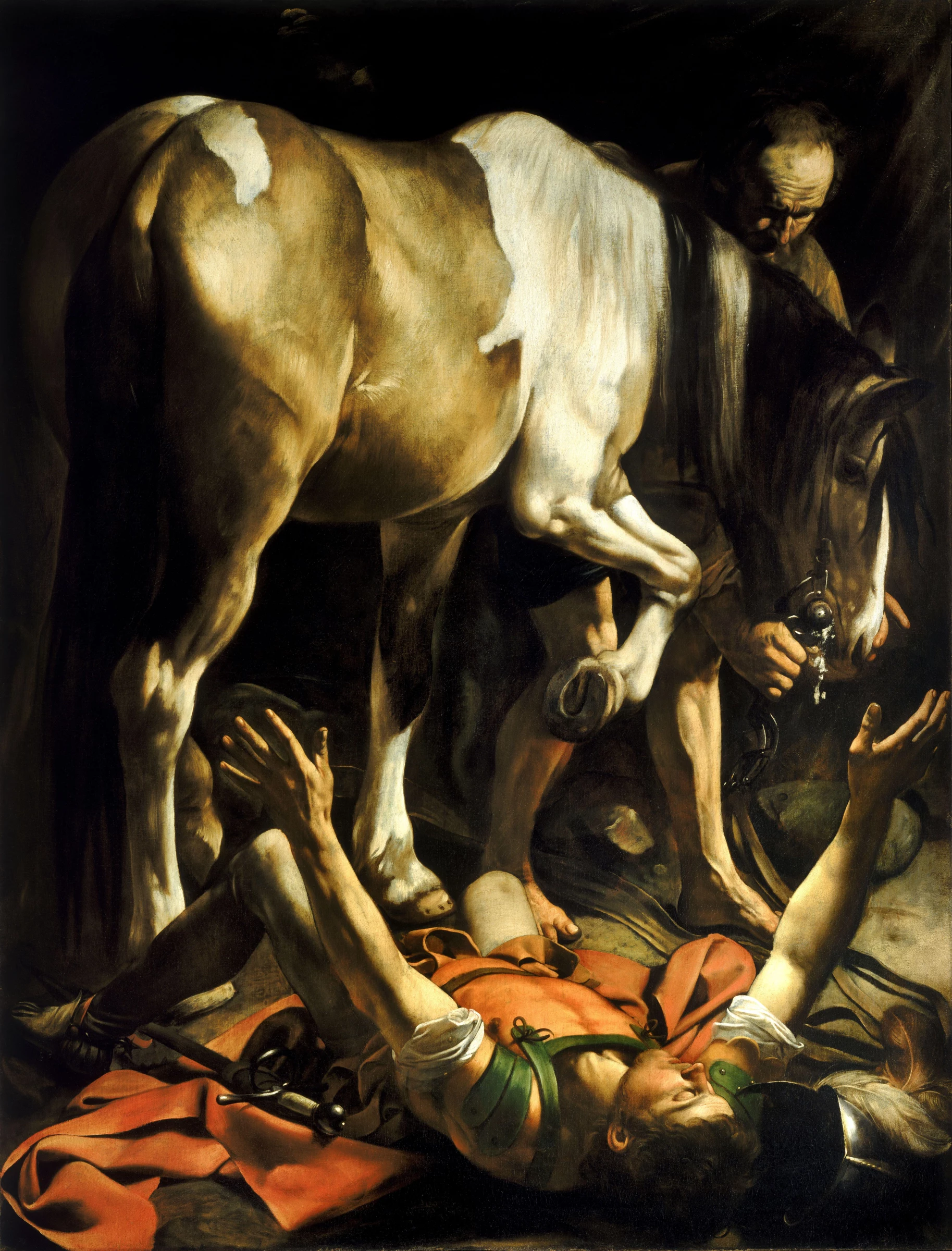
The Conversion of Saint Paul, painted around 1600–1601 for the Cerasi Chapel in Santa Maria del Popolo in Rome, depicts the moment when Saul experiences the divine revelation that will radically transform his life.
Caravaggio reduces the scene to three essential protagonists: Paul, a horse and the elderly man handling the animal. The future apostle lies on the ground with his eyes closed and his arms extended towards a presence that remains invisible to the viewer.
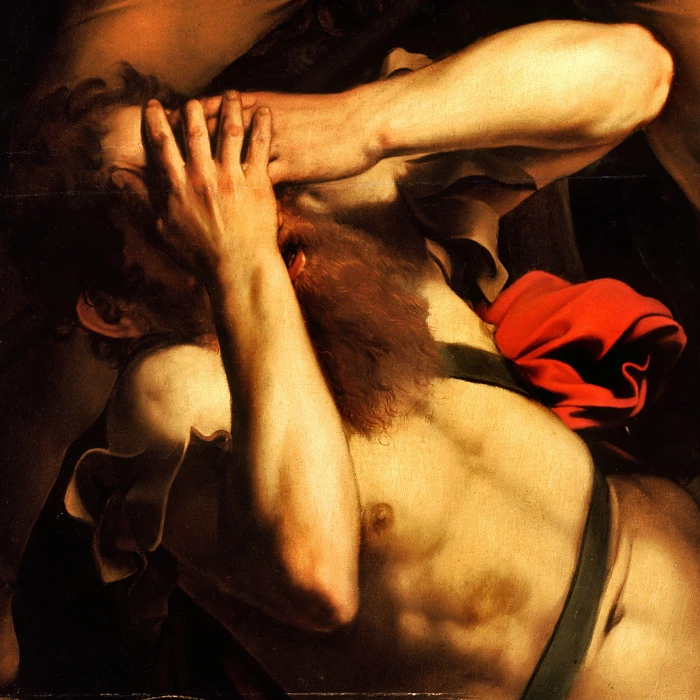
Light replaces the physical representation of the supernatural. It illuminates Paul's body and transforms the conversion into an essentially inward experience. The horse, rendered with remarkable naturalism and on a monumental scale, visually dominates the composition. The spiritual revelation remains unseen; the fallen body, open arms and carefully directed light allow viewers to understand the future apostle’s transformation.