Description
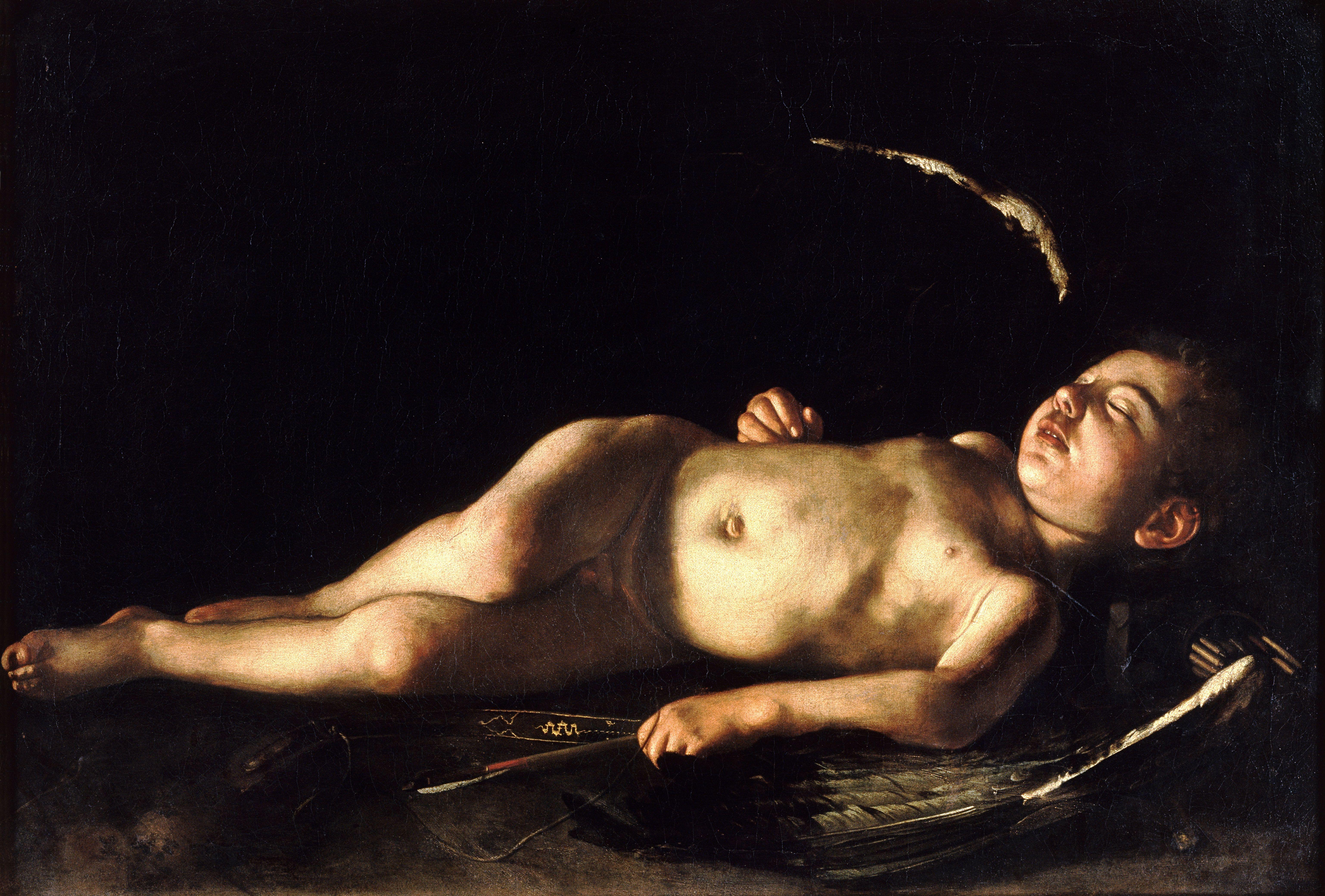
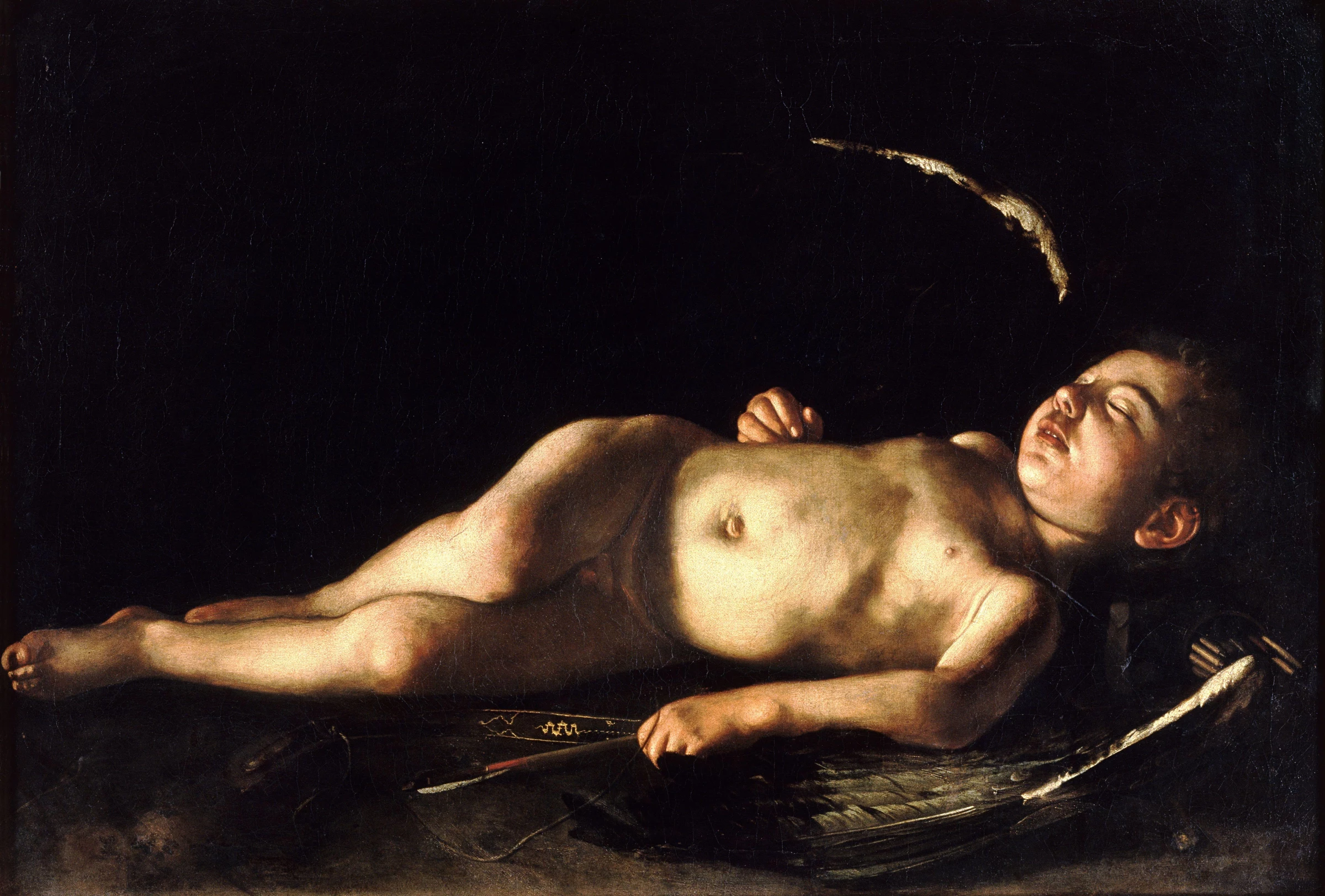
Cupid appears as a completely nude child in deep sleep, lying horizontally in a space almost entirely absorbed by darkness. His wings are barely visible and the traditional attributes of the god of love—the bow and arrows—have lost their active function. Caravaggio deliberately rejects the idealized beauty characteristic of many mythological representations and observes the child's body with uncompromising naturalism.
Light selectively crosses portions of the body while others disappear into shadow, emphasizing deep sleep and vulnerability. The slack or broken bowstring and abandoned weapons have encouraged interpretations of the composition as an image of love temporarily defeated or passions brought under control. Painted in Malta in 1608, it represents an unusual mythological subject within Caravaggio's late production, otherwise dominated by religious paintings and portraits.