Description
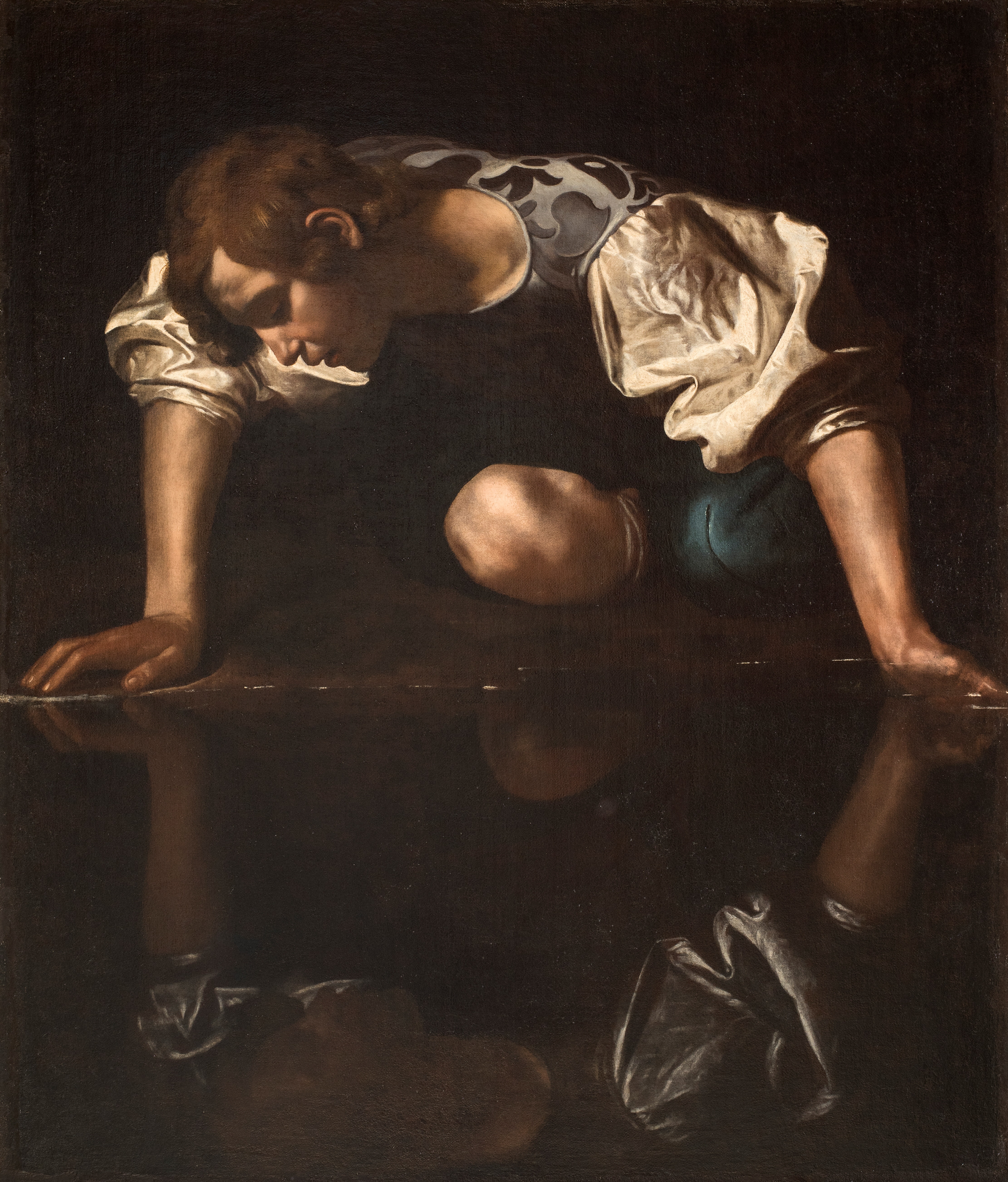
Narcissus, dated around 1597–1599 and traditionally attributed to Caravaggio, depicts one of the best-known episodes from Ovid's Metamorphoses. The beautiful young Narcissus bends over the water and becomes fascinated by his own reflection, initially unaware that the image he desires is his own.
The composition almost entirely eliminates landscape and narrative setting. Narcissus emerges from a dark background and occupies the upper half of the painting, while his reflected image extends in the opposite direction below. Figure and reflection therefore create a closed visual structure focused entirely on the relationship between the young man and his double.
Its remarkable economy of means and mirror-like composition make the painting a powerful exploration of identity, desire, representation and illusion , regardless of the continuing debate over its authorship.