Description
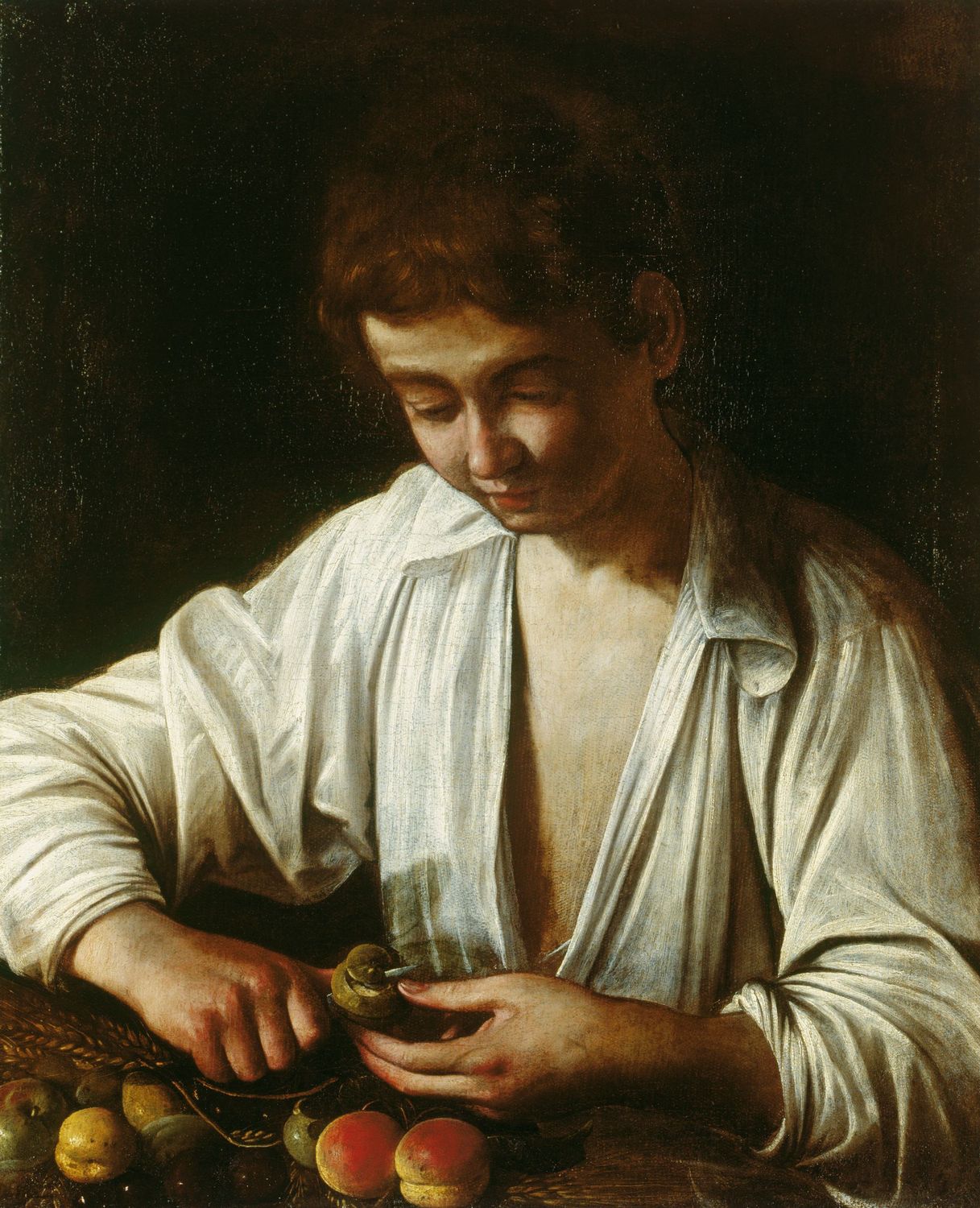
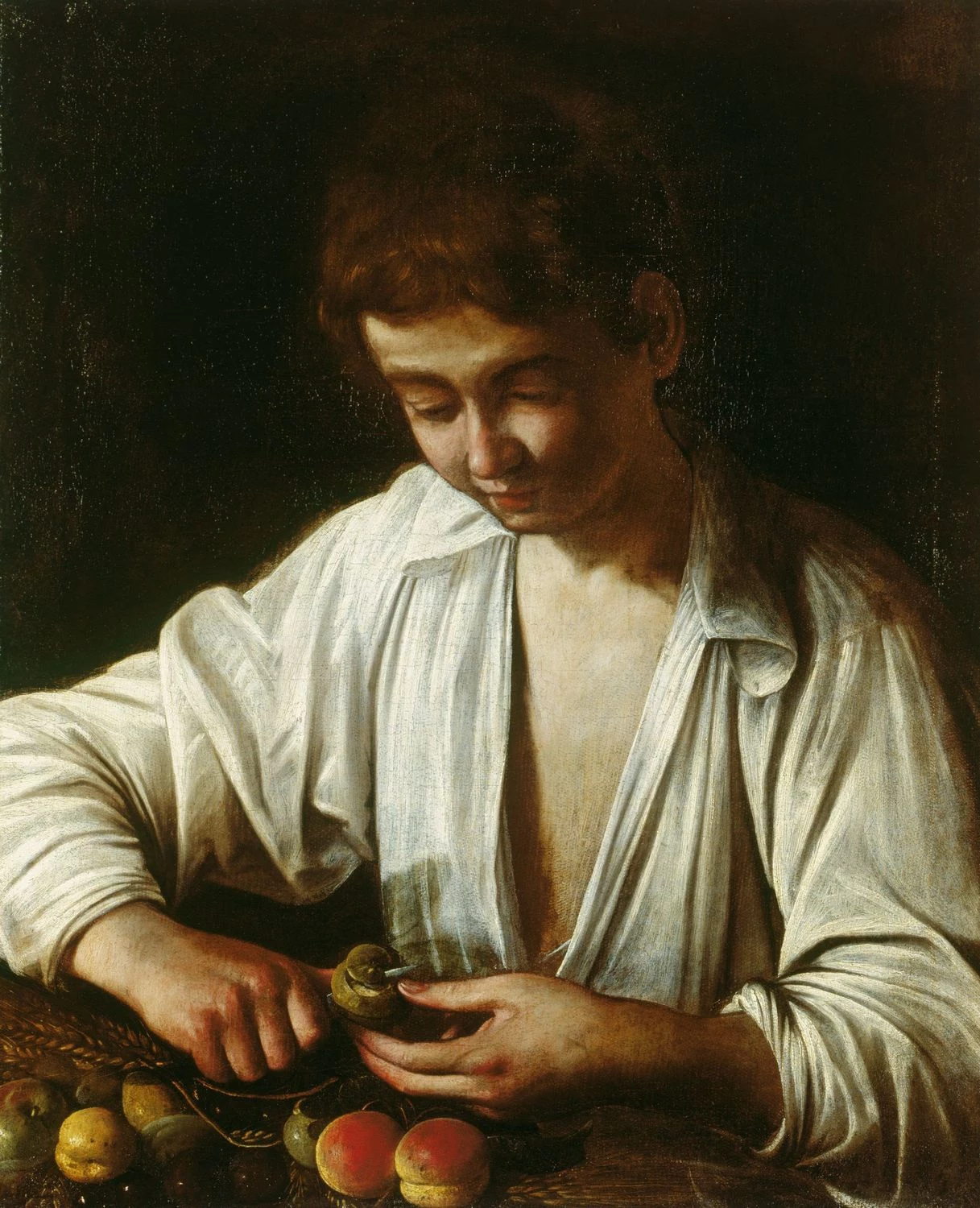
In Boy Peeling Fruit, a composition associated with Caravaggio's first Roman years, a young man concentrates on the ordinary task of removing the skin from a piece of fruit. The painting sets aside grand narrative and directs attention to the relationship between the body, the hands and everyday objects.
Light models the face, pale shirt and fruit arranged on the table. This close observation of visible reality anticipates the central role of naturalism and illumination in Caravaggio's later work. Known through several versions and the subject of attribution debates, the composition provides valuable evidence of the painter's early artistic investigations. The importance of Boy Peeling Fruit lies less in an unproven hidden message than in its insistence that ordinary experience can sustain serious painting.