Description
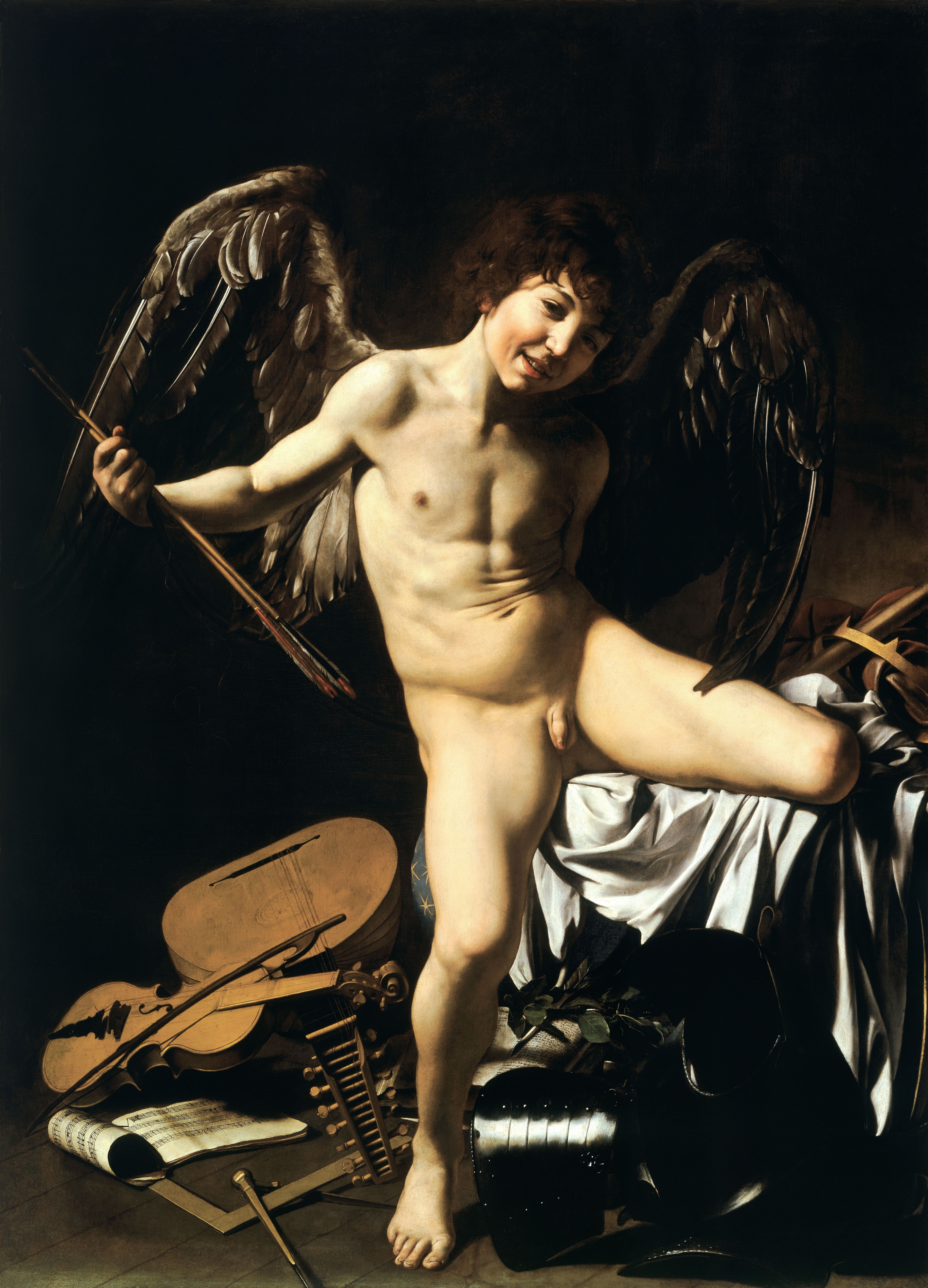
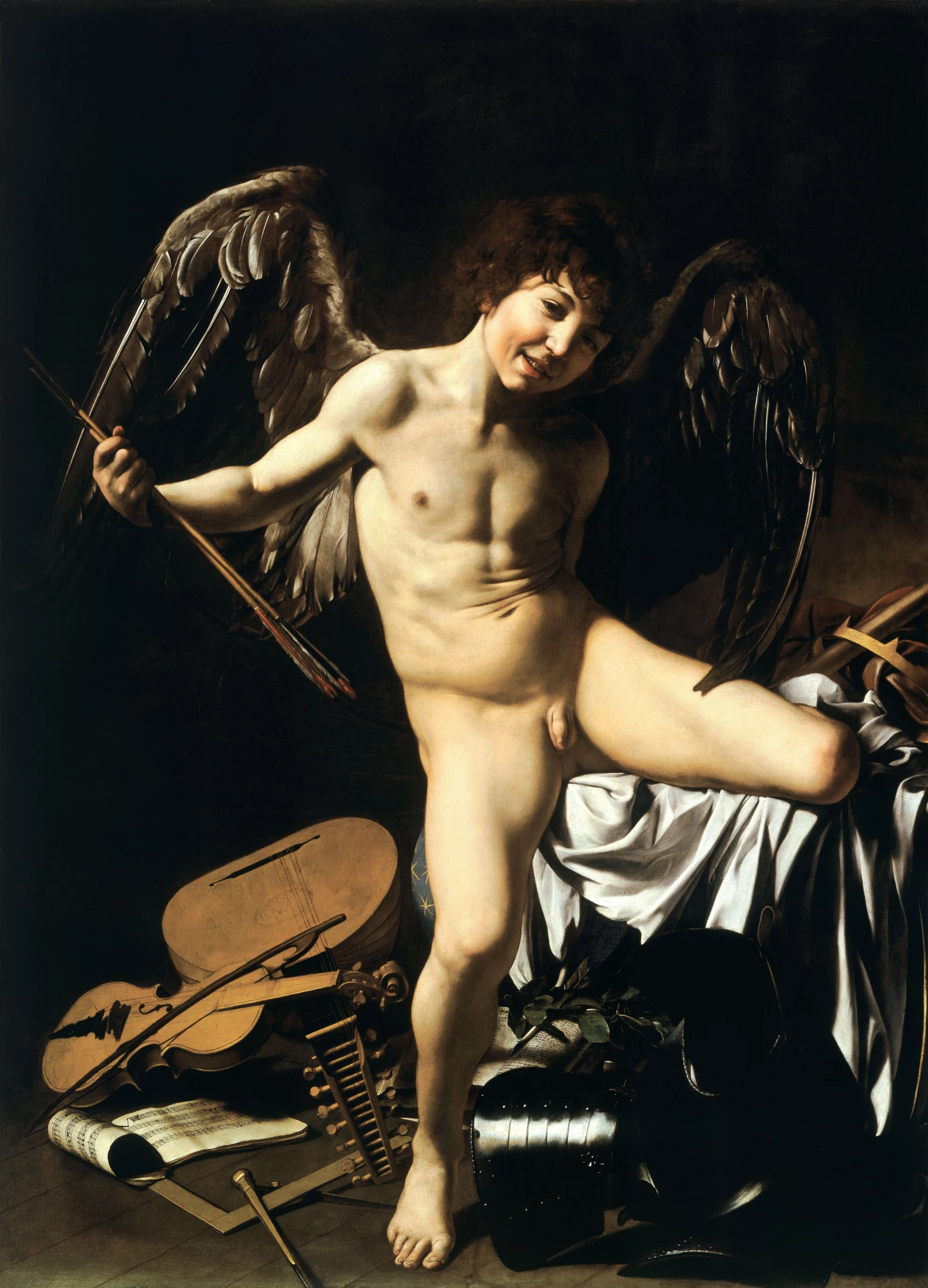
Amor Victorious , painted around 1601–1602 for Vincenzo Giustiniani, depicts the god of Love as a naked, winged youth triumphantly asserting his power over human activities. Musical instruments, scores and objects associated with knowledge and power lie scattered at his feet. Their disorder and subordination to Cupid transform the composition into a visual expression of Virgil's celebrated phrase Omnia vincit Amor : “Love conquers all.” Caravaggio replaces the idealized beauty of classical tradition with the physical presence of a real model.
The youth smiles directly at the viewer and assumes a spontaneous, provocative pose, while intense illumination emphasizes his body against the dark background. Every defeated object extends the scope of the allegory. Stringed instruments and sheet music evoke music; the geometrical tools recall learning; armour refers to war; the crown and sceptre represent political authority.