

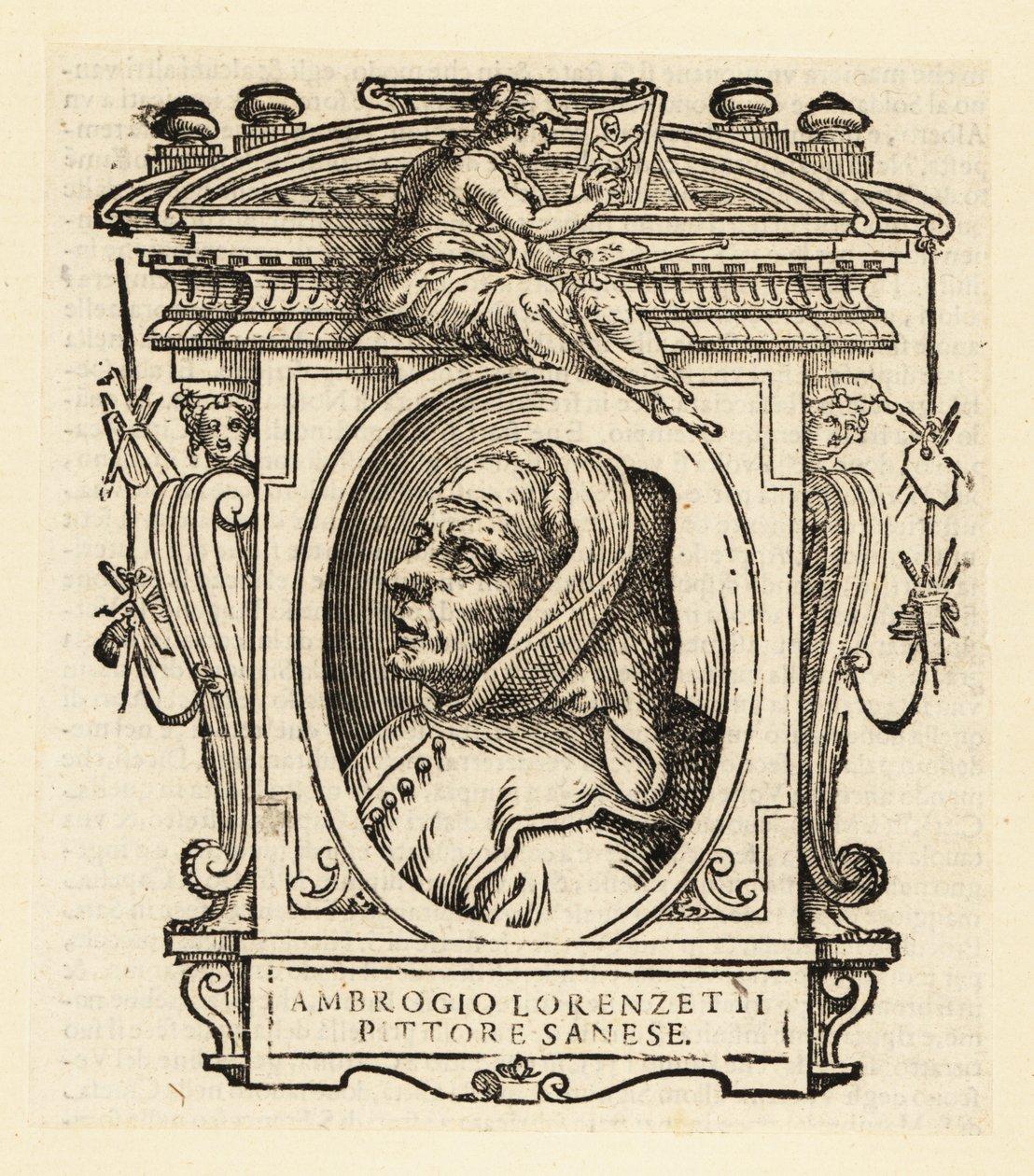
Ambrogio Lorenzetti
Ambrogio Lorenzetti was one of the most original and innovative painters of the fourteenth-century Sienese school. Alongside his brother Pietro Lorenzetti and Simone Martini, he played a decisive role in transforming Italian painting through a growing interest in spatial depth, naturalism, and the expression of human emotion.
Probably born in Siena towards the end of the thirteenth century, he worked in both Siena and Florence, where he encountered the artistic innovations associated with Giotto. His visual language combined the refined linear elegance and rich colours inherited from Duccio di Buoninsegna with more substantial figures, increasingly complex spatial relationships, and a remarkable ability to tell stories through images.
His religious paintings include outstanding representations of the Virgin and Child, the Annunciation, and the Presentation of Christ in the Temple. These works reveal his interest in painted architecture, expressive gestures, and the construction of convincing spaces, anticipating concerns that would become central to Renaissance painting.
His greatest achievement is the fresco cycle known as the Allegory of Good and Bad Government and its Effects in the City and Countryside, created for Siena's Palazzo Pubblico. This monumental ensemble is among the most remarkable examples of medieval political imagery, transforming ideas about justice, civic responsibility, and government into scenes of collective life, economic activity, and social order.
The depictions of urban streets, buildings, workshops, merchants, agricultural labour, and the surrounding countryside demonstrate Lorenzetti's exceptional powers of observation. His paintings offer an unusually vivid representation of fourteenth-century society, extending the possibilities of pictorial narrative far beyond conventional religious subjects.
His career probably ended during the Black Death of 1348. His artistic legacy occupies a crucial position between medieval visual traditions and the developments that eventually shaped the Renaissance, particularly in the representation of space, everyday life, and the relationship between individuals and their surroundings.